
Journal · Sonic branding
Sonic branding in hospitality: sound that keeps guests
Sonic branding in hospitality is the deliberate design of everything a hotel, resort, or restaurant sounds like: the tone that greets a guest at the desk, the pace of the lobby's music, the hold music heard before a human ever answers, the chime a room's touchpad or elevator makes - built to be recognized as the brand's own rather than left to whatever a shared streaming service happens to be playing that shift. It is retail's quieter cousin: a store has minutes to move a shopper through; a hotel has an entire stay, hours or days spent living inside the brand's sound rather than passing through it once. Here is what that difference actually demands, and why almost no hospitality brand has answered it yet.
Why hospitality is a different brief than retail
Retail sound design is built around footfall - a shopper passing through in minutes, at most, before moving on to the next store. Hospitality inverts that scale entirely: a guest checks in for a night, a week, sometimes a season, and spends the whole stay inside the brand's sound rather than sampling it once. A retail sound logo has seconds to register before a customer moves to the next aisle; a hotel's ambient sound has to survive being heard for days without curdling into wallpaper, because staying pleasant on the third morning is a harder brief than being memorable in the first three minutes. The underlying discipline doesn't change - a deliberate signature beats anything borrowed - but the brief itself does, which is exactly why sonic branding in retail promised this category its own piece rather than a paragraph.
The industry's own research suggests the gap is real. amp's 2026 Best Audio Brands report - the same agency behind the Sound of Beauty research cited elsewhere on this site - found travel and transportation among the most generic-sounding sectors it measured, with close to six in ten travel brands leaning on stock music rather than an owned signature. Hospitality sits inside that same underserved territory: try to hum a single hotel chain's sound from memory, and the silence that follows answers the question better than any survey could.
What research exists specifically on hospitality's own touchpoints points the same direction. Ronald Milliman's 1986 restaurant study - the follow-up to his supermarket research on tempo - found that slower background music kept diners at the table longer and raised bar spend compared with faster-tempo music, the same lever working just as reliably in a dining room as it does on a shop floor. Extend that logic to a lobby, a spa, or a pool bar and the principle holds: sound that governs pace is sound that governs revenue, whether anyone in the building is thinking about it or not.
What sonic branding actually looks like in a hotel or resort
Strip a hospitality identity down to its parts and it is built from a handful of touchpoints, each doing distinct work across a stay that a single retail visit never gets the chance to.
Arrival and lobby signature
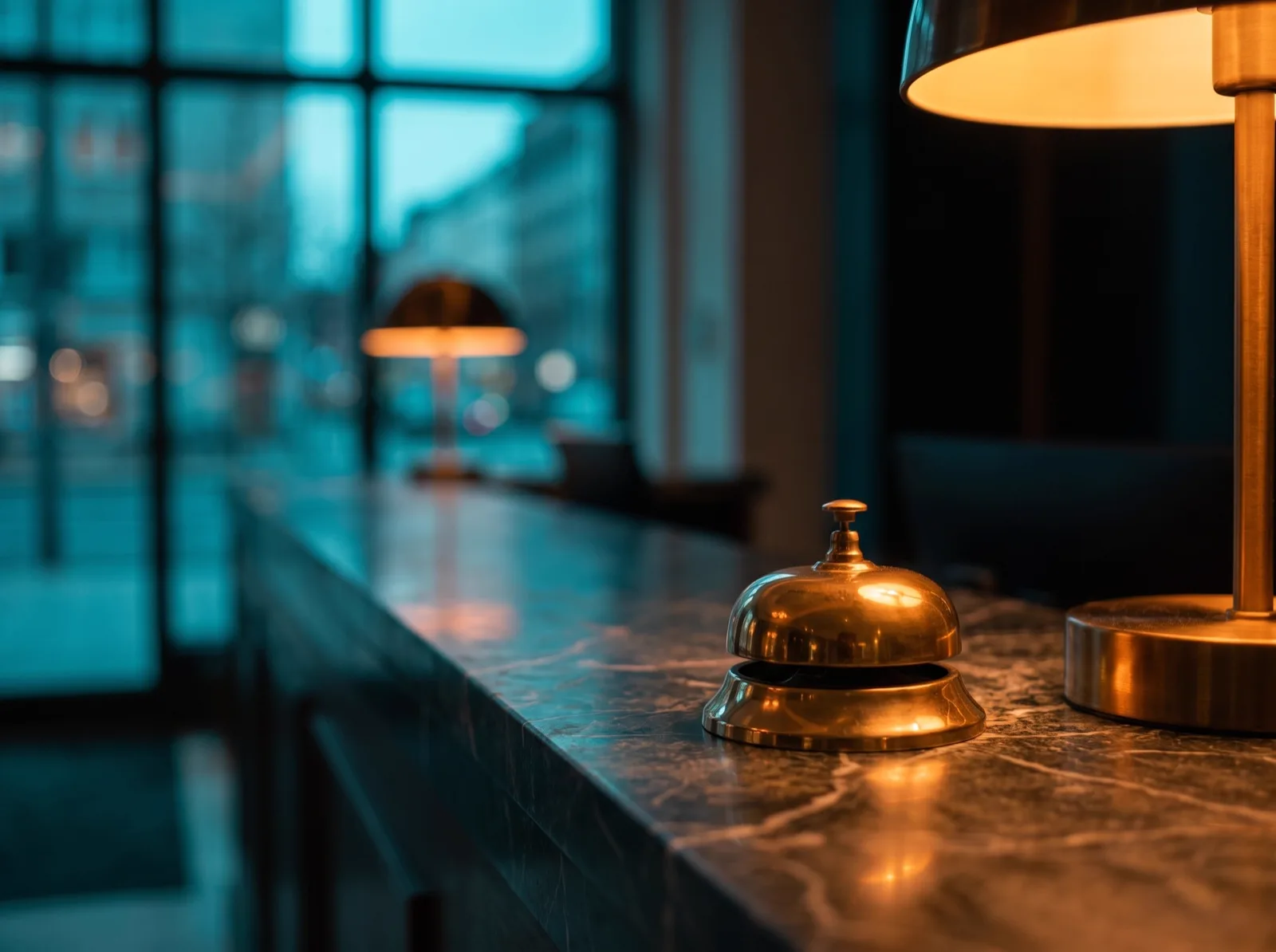
The first sound a guest hears - a bell, a door chime, the lobby's ambient loop - sets the register for everything that follows, the same way a sound logo works at a store's entrance. The difference is duration: a shop's signature plays for seconds, a lobby's plays on a loop for however long guests linger in it, which means the composition has to reward long exposure rather than just an instant of recognition.
Reservation hold music and phone touchpoints
Long before a guest reaches the building, the brand has usually already spoken through a phone line - the hold music before the front desk picks up, the tone on a booking confirmation call. It is one of the cheapest touchpoints to get right and one of the most commonly left to whatever the phone system shipped with by default, which means most hospitality brands are handing a first impression to their PBX vendor rather than to their own identity.
F&B and bar sound
The restaurant, bar, and room service are where Milliman's tempo research applies most directly: a paced, considered soundtrack that extends a meal is doing measurable commercial work, not just filling silence. It is also the touchpoint most likely to drift, because a single F&B outlet inside a larger property often runs its own playlist, chosen by whoever is on shift, disconnected from whatever the lobby or the brand's own ads sound like.
In-room and spa
The room itself is the one touchpoint retail has no equivalent for: hours of unsupervised, private exposure, where a considered ambient option - rather than silence or a generic streaming default - is a genuine amenity. Spas extend the same logic further still, since treatment sound is judged with a guest's eyes closed and full attention on the ear - the exact condition sonic branding is designed for, and one beauty's own counter and treatment spaces already understand well.
The example everyone cites - and how rare it actually is
Search this subject and one name surfaces before any other: Westin's "This Is How It Should Feel" program, built around a single brand promise and deployed with unusual discipline - across television advertising, website audio, reservation hold music, public areas, elevators, and in-room environments. It is the most widely referenced integrated sonic branding strategy in luxury hospitality for a simple reason: almost nobody else has built one. Most hotel brands, including plenty at the same price point, still leave lobby and F&B sound to whichever streaming service the property manager happens to subscribe to, changed on no particular schedule by whoever is on shift that week. Westin's case doesn't prove the tactic is common - it proves the opposite: a governed, cross-touchpoint sonic system in hospitality is still rare enough that one program, now well over a decade old, remains the example every article on this subject reaches for, including this one.
Hospitality sonic branding vs. retail sound
The two categories share a toolkit but solve for opposite variables - retail wants a shopper moving, hospitality wants a guest staying, and that single difference reshapes almost everything else about the brief.
| Dimension | Hospitality | Retail |
|---|---|---|
| Typical exposure | Hours to days, repeated | Minutes, during one visit |
| Primary goal | Comfort and extending the stay | Moving shoppers through |
| Where the sound lives | Lobby, room, phone line, F&B | The physical store floor |
| Biggest risk to ownership | Generic hold music and disconnected F&B playlists | A curated streaming playlist with no brief |
The underlying discipline is identical - a deliberate signature, repeated consistently, beats anything borrowed - but a hospitality brief has to survive being heard for days, not minutes, which is a different kind of composing problem entirely, covered from the store side in sonic branding in retail.
The mistake that undoes most hotel sound
One failure accounts for most hospitality sound that never becomes an identity: treating each touchpoint as someone else's department. The phone system ships its own hold music, the restaurant manager curates a personal playlist, the spa plays whatever streaming service has the best ambient category, and the lobby runs a fourth, unrelated system entirely - four departments, four sounds, and a guest who experiences all four as one single brand. A sonic identity only compounds if the same signature, or a clearly related family of sounds, shows up at every one of those points; a property that sounds like four different businesses under one roof is not building recognition, it is running four uncoordinated ones.
What it costs and how it's built
Pricing follows the same logic as any commissioned sonic identity: scoped to touchpoints, not sold off a rate card. A single property replacing its default hold music and lobby loop is a smaller commission than a multi-property group building a system across reservations, F&B, and in-room audio. For the full tier-by-tier breakdown of what drives the number, see what does sonic branding cost. The build process itself doesn't change by category - brand analysis, a composed or curated core idea, testing at the scale the brand actually needs - covered in full in the sonic branding service overview.
How to audit your property's sound in an afternoon
Before commissioning anything, any hospitality brand can run this test on its own property for the cost of an afternoon. Call your own reservation line: is the hold music considered, or a factory default? Sit in the lobby for twenty minutes with a notebook: does the ambient loop hold one character, or drift between moods depending on who last touched the system? Eat a meal in your own restaurant and listen specifically for pace: is the tempo doing anything, or is it just present? Play your ads back to back with a recording of the lobby: would a guest recognize either as belonging to the same brand with their eyes shut? Walk two competitor properties in the same city and repeat the exercise: in most markets you will find everyone drawing from the same three moods, which means distinctiveness is sitting there unclaimed. The gap list that comes out of that afternoon is the brief - and in hospitality specifically, it is rarely being closed by anyone in the category yet.
Frequently asked questions
What is sonic branding in hospitality?
It is the deliberate design of sound across a hotel, resort, or restaurant's touchpoints - the arrival signature, reservation hold music, F&B pacing, in-room ambience, and staff or notification tones - built to be recognized as the brand's own rather than left to a default streaming playlist or phone system.
Does background music affect how long guests stay at a hotel bar or restaurant?
The research suggests it does. Ronald Milliman's 1986 restaurant study found that slower background music kept diners at the table longer and raised bar spend compared with faster-tempo music - the same tempo effect his earlier supermarket research found on shopping pace, applied to a dining room.
Is hold music part of sonic branding?
Yes, and it's one of the most overlooked touchpoints. Reservation hold music is often a guest's first exposure to a hospitality brand's sound, but most properties leave it as whatever their phone system shipped with by default rather than treating it as a designed part of the identity.
What's a well-known example of hotel sonic branding?
Westin's "This Is How It Should Feel" program is the most widely cited case - a sonic identity deployed across advertising, website audio, reservation hold music, public areas, elevators, and in-room environments, built around a single brand promise rather than left to a shared playlist.
How much does a hospitality sonic identity cost?
It depends on scope - replacing a single property's hold music and lobby loop is a different commission than building a system across reservations, F&B, and in-room audio for a multi-property group. For the full tier-by-tier breakdown of what drives the price, see what does sonic branding cost.